Meta Ray-Ban Display Adds Navigation and a Digital Face for Calls
Meta’s display glasses gain new travel tools and a voice-driven Hologram feature, with availability rolling out in stages.
 By Phil Matt
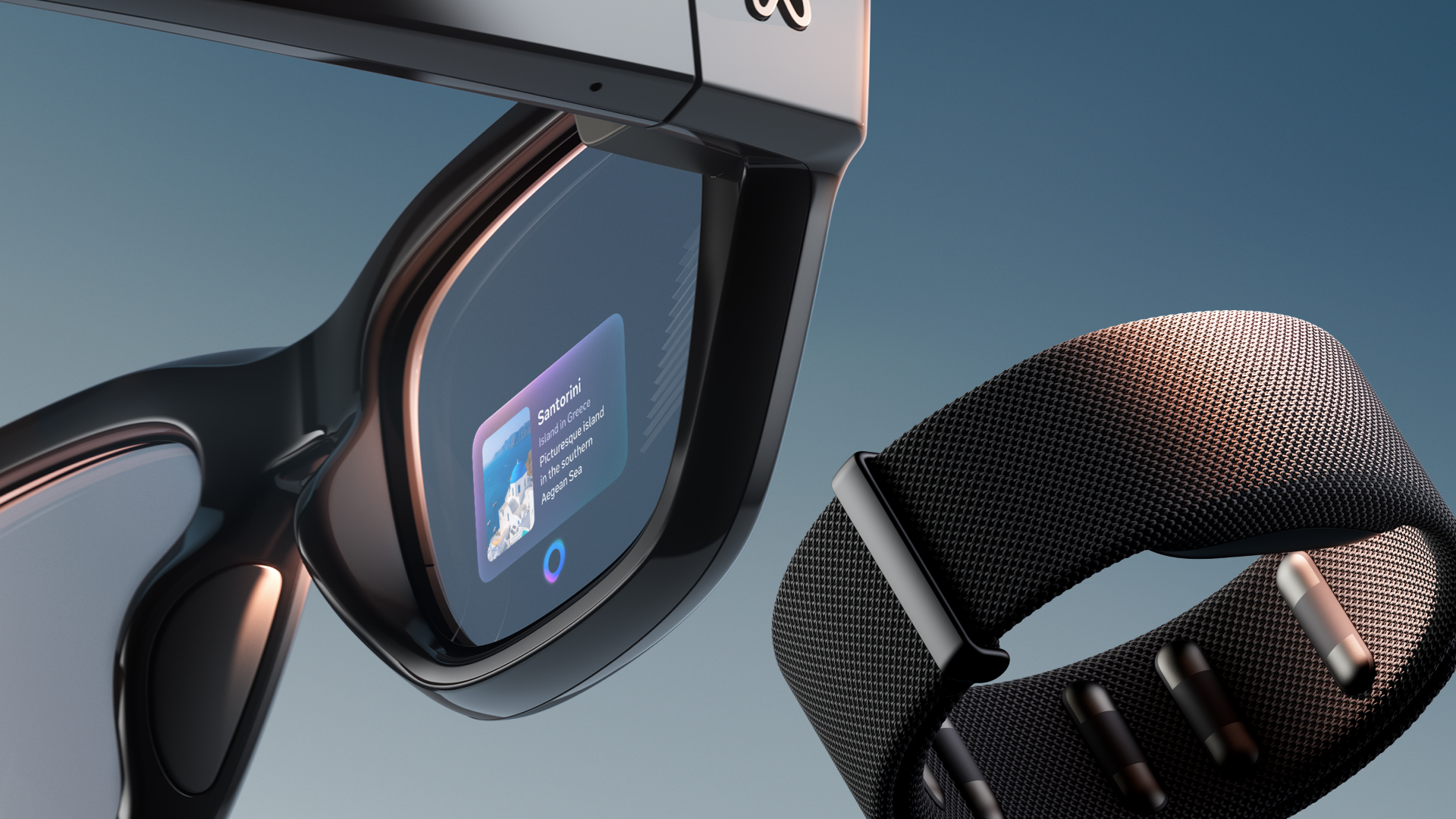
Meta is expanding what Ray-Ban Display glasses can do, with new navigation tools, a digital face for calls and a broader retail rollout announced at Connect 2026. The updates move the product further toward short, everyday interactions that can happen without taking out a phone.
Cycling directions and real-time public transit information are scheduled to begin arriving in the US and Canada later this month. Hologram, a photorealistic digital representation created through a self-capture process, is planned for WhatsApp Early Access in the US later this fall. Its expressions are inferred from the wearer’s voice, rather than filmed live by a camera facing the wearer.
Directions are a convincing use of a small display
A useful wearable interaction does not need to last very long. Knowing the next turn or the departure time can be enough. That makes navigation a more natural fit for glasses than trying to reproduce an entire phone interface in front of the eye.
The design challenge is deciding how much information belongs there. A brief instruction can reduce the need to look down. Too many alerts could create another source of distraction. The value depends on what the glasses show, when they show it and how easily the wearer can return attention to the surroundings.
Meta also says US online ordering begins today, alongside sales in Canada and the UK. France, Italy and Germany are scheduled for availability on October 13. These dates concern the announced rollout; individual features have their own timing and regional limits.
A face on a call is not always a live picture
Hologram is the more unusual part of the update. It addresses a real limitation of glasses: a forward-facing camera cannot provide the same view of the wearer as a phone held in front of the face. Meta’s answer is a generated representation driven by speech.
That distinction should remain clear to the person receiving the call. A convincing face can create a sense of presence, but inferred expressions are different from a live visual record. The feature is best understood as a communication interface, not evidence of exactly what the wearer looks like at that moment.
Together, the announcements show two directions for smart glasses. Navigation puts small amounts of useful information in view. Hologram experiments with how a wearer appears to someone elsewhere. Both are more interesting when judged by the interaction they enable than by the novelty of putting another screen on the body.