Dyson’s New Nurovi Robots Aim to See the Mess Before Cleaning It
Dyson’s Berlin unveiling puts AI vision at the center of a new robot range, led by the R3 Nurovi Spot+Scrub UV.
 By Lisa Pu
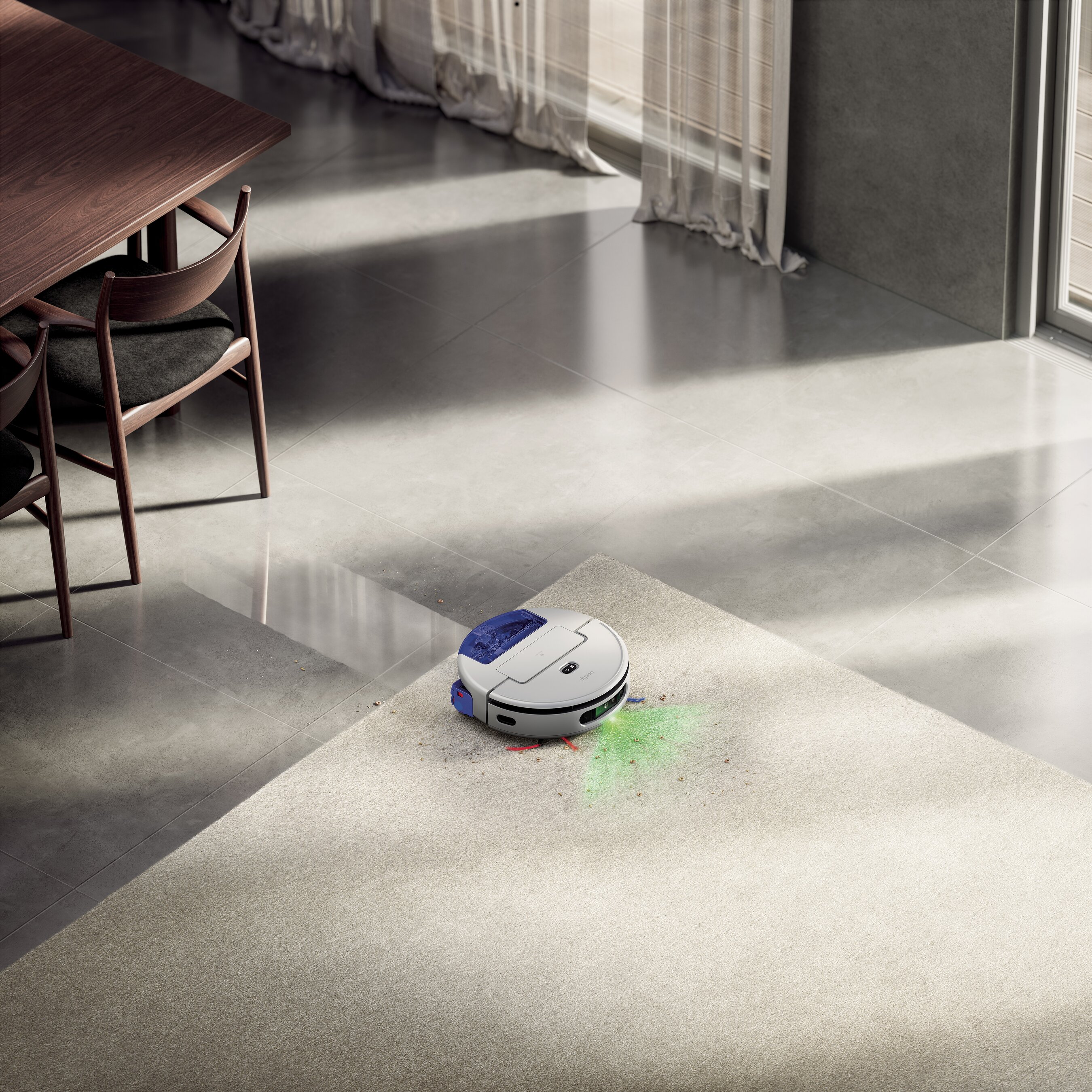
Dyson has unveiled the Nurovi robot range in Berlin, making machine vision a central part of its latest floor-cleaning proposition. The headline R3 Nurovi Spot+Scrub UV combines UV light, AI vision and green illumination in a system designed to identify stains and respond to what it finds.
Dyson says the R3 can recognize nearly 200 types of household substances and objects. Its wet roller uses fresh heated water and extends toward room edges, while a bagless dock handles emptying, cleaning and recharging. The wider Nurovi family includes the R2 Wash+Dry and R1 Dry, giving the announcement several approaches to different cleaning jobs.
Seeing a stain is only the beginning
The interesting change is the proposed relationship between detection and action. A robot following a route can cover the floor, but coverage alone does not reveal whether a particular patch is clean. A system that identifies a stain can, in principle, spend more attention where it is needed.
That is a more useful way to discuss AI in a household appliance than treating the term as a feature by itself. The relevant result is whether the robot finds a problem, chooses an appropriate response and stops when the job is complete. Recognition is valuable only when it improves the cleaning routine.
Dyson’s claims remain manufacturer descriptions of the new machines. They do not establish how the robots will perform across every floor finish, lighting condition or type of spill. Those are questions for testing in varied homes, rather than conclusions to draw from an unveiling.
The dock is part of the product
Robot cleaners are often photographed as compact discs moving neatly through open rooms. Their docks deserve equal attention. A station needs a suitable location, access to power and enough clearance for the robot to return reliably. Its tanks and collected waste still have to fit into a household’s maintenance routine.
For an apartment, those physical details may determine whether the product feels convenient. A capable cleaner that has no sensible place to live can become another obstacle. The same applies to floor clutter, thresholds and the spaces beneath furniture.
The Nurovi announcement makes an ambitious case for appliances that adjust to what they observe. The R3 is the clearest expression of that idea, pairing visual detection with repeated cleaning and a more involved dock. The promise is less supervision. The eventual measure of success will be how much useful work happens between the moments when a person has to step in.