Lenovo’s Rollable Legion Concept Makes a Gaming Laptop Wider
The Legion Pro Rollable Concept expands from a 16-inch laptop display to a 24-inch canvas, using an OLED panel developed with TCL CSOT.
 By Peter Wong
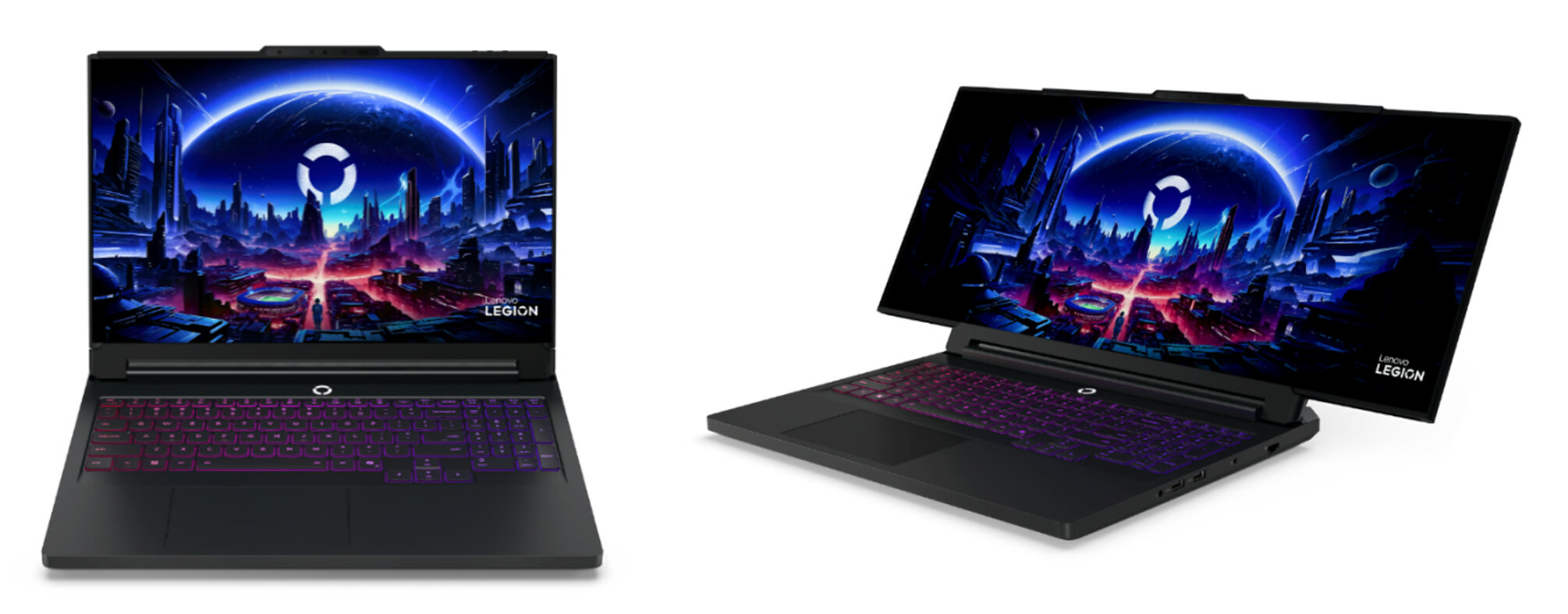
Lenovo’s Legion Pro Rollable Concept has brought one of CES 2026’s most literal screen upgrades: a gaming laptop that becomes wider. Developed with display partner TCL CSOT, the concept starts with a 16-inch OLED display and expands horizontally to 21.5 inches, then to 24 inches.
The companies describe a dual-motor system that unrolls the panel from both sides, with a tensioning mechanism intended to keep the surface taut. The three sizes are presented as Focus, Tactical and Arena modes for different training scenarios. This is a concept demonstration, not an announcement of a laptop with a confirmed retail price or shipping date.
More space without another monitor
The attraction is easy to see for anyone who has worked or played on a laptop while wishing for a larger display. An external monitor solves that problem at a desk, but it introduces another object to transport, connect and power. A screen that expands from the laptop itself approaches the same limitation differently.
For gaming, additional width can change how much of a supported scene is visible. For other tasks, it could make room for a reference window or a wider timeline. Those possibilities depend on software behavior and the final implementation; a larger physical panel does not guarantee that every application will use the space well.
The official image makes the concept especially clear by showing the same machine in compact and expanded forms. The keyboard stays familiar while the screen changes around it. That continuity is part of the appeal: the device can remain recognizable as a laptop even as its proportions become unusual.
The mechanism has to earn its place
A moving display introduces practical questions that a fixed panel does not. How much does the mechanism weigh? How does it affect the lid’s rigidity? What happens after repeated travel, dust exposure and thousands of expansion cycles? A demonstration can show the motion, but it cannot answer every ownership question.
There is also the desk itself. A screen that becomes much wider still needs clear space on either side. The concept solves one kind of portability problem while leaving the physical dimensions of the expanded workspace unchanged.
Lenovo and TCL CSOT’s project is compelling because its purpose is visible immediately. It is not a hidden specification improvement; the user can watch the working area grow. The challenge now is whether that memorable movement can become a dependable, practical feature that justifies its place in a finished gaming laptop.