LG’s CLOiD Robot Takes the Smart Home Beyond Voice Commands
LG is preparing to demonstrate an AI home robot at CES 2026, with arms, a wheeled base and connected-appliance coordination.
 By Lisa Pu
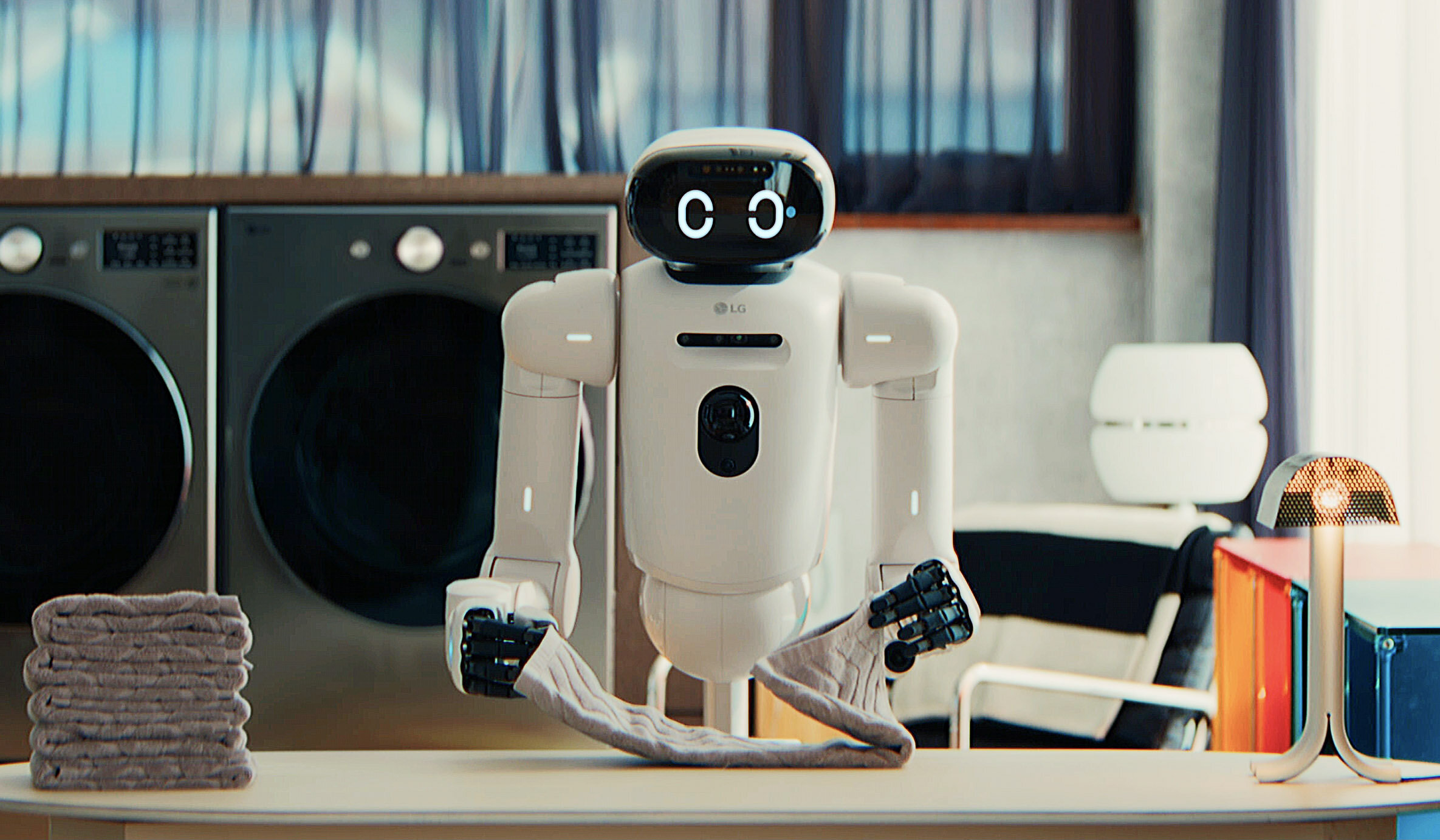
LG has announced CLOiD, an AI-enabled home robot scheduled for its first public demonstration at CES 2026. The company is moving beyond the idea of a smart home that responds only through screens and speakers, proposing a machine that can interact physically with appliances and household objects.
The planned demonstrations include retrieving milk, putting a croissant into an oven and handling laundry tasks. CLOiD has two articulated arms, hands with independently actuated fingers and a wheeled base. Cameras and sensors support navigation and object understanding, while integration with LG’s ThinQ ecosystem connects the robot to compatible appliances.
The difficult part is the room
Household robotics is compelling because the tasks sound so ordinary. Moving an item from one place to another does not seem remarkable until the item changes shape, the door is partly closed or something unexpected is in the way.
A home contains exactly that kind of variation. Towels fold differently, objects are left in unfamiliar places and people move through the same space. The challenge is not only recognizing what a thing is. A robot must also decide how to approach it, hold it and complete an action without creating another problem.
That is why a demonstration should be read carefully. A successful sequence can show what a system is capable of under selected conditions. It does not establish how reliably the same machine would work across thousands of unprepared homes.
Arms change the promise of a connected home
An app can tell an appliance to start, but someone still has to load it. A voice assistant can supply instructions, but it cannot necessarily carry the object those instructions concern. Giving a home system physical reach addresses that gap directly.
For a household, however, convenience has to include the robot’s own needs. Storage, cleaning, maintenance and the space required to move all become part of the calculation. A device intended to reduce chores should not quietly create a new set of daily obligations.
LG’s announcement does not provide a consumer purchase date or establish CLOiD as a finished product available to order. For now, it is a preview of the company’s direction, with CES set to show the proposed interactions in public.
The idea is ambitious because it targets the least glamorous part of living with technology: the work that still requires a pair of hands. If the demonstrations are the beginning of a practical home robot, reliability in ordinary, messy rooms will matter much more than the elegance of a staged routine.