J.Crew and Eckhaus Latta Give Familiar American Sportswear an Unfamiliar Shape
 By Phil Matt
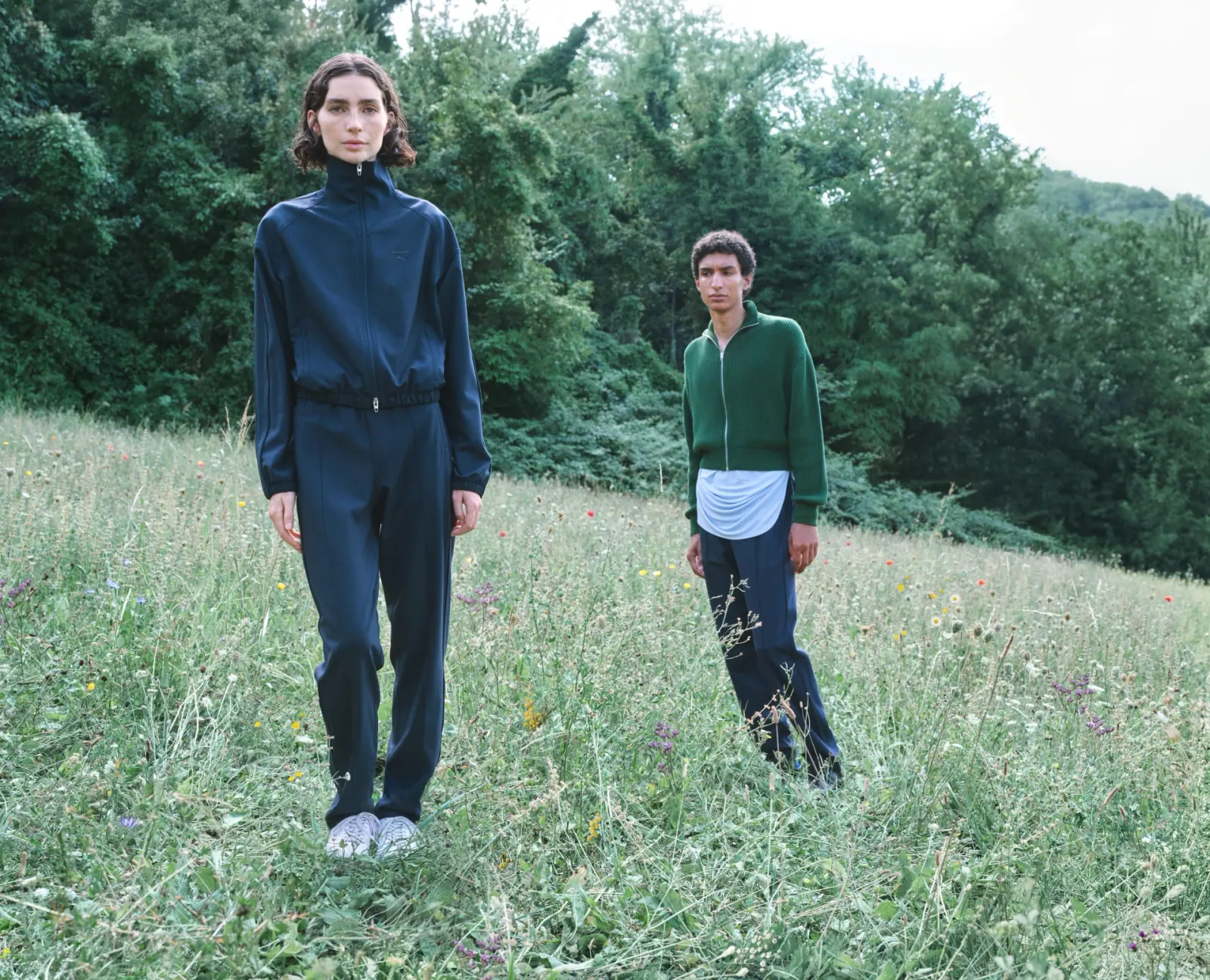
J.Crew and Eckhaus Latta have released a limited-edition collection that takes recognizable American sportswear and changes how it is put together. Launching today, the collaboration follows the designers' earlier involvement in J.Crew's Rollneck Remix project and expands into a fuller wardrobe.
Mike Eckhaus and Zoe Latta draw on 1990s J.Crew catalog imagery, but the results are not straightforward reproductions. The assortment includes a layered Barn Jacket, double-waisted chinos, overlapping shirts and paneled skirts, alongside knitwear and accessories. Pieces appeared in Eckhaus Latta's Spring 2027 runway presentation on September 11.
Familiarity makes the changes visible
A recognizable garment gives a designer something useful to interrupt. When the viewer already understands the usual arrangement of a chino or a button-down shirt, a second waistband or an overlapping section becomes immediately legible. The alteration does not need an elaborate explanation.
That is also what makes this kind of collaboration accessible as an idea. Someone can appreciate the tension between ordinary clothing and unusual construction without wanting to wear the entire look. A changed proportion can provide enough interest for an outfit built around otherwise familiar pieces.
The risk is that the design becomes a visual trick with limited use beyond its first impression. The more successful pieces will be those where the alteration also creates an appealing shape, allowing the garment to work even when the novelty is no longer the main attraction.
Knitwear introduces another scale
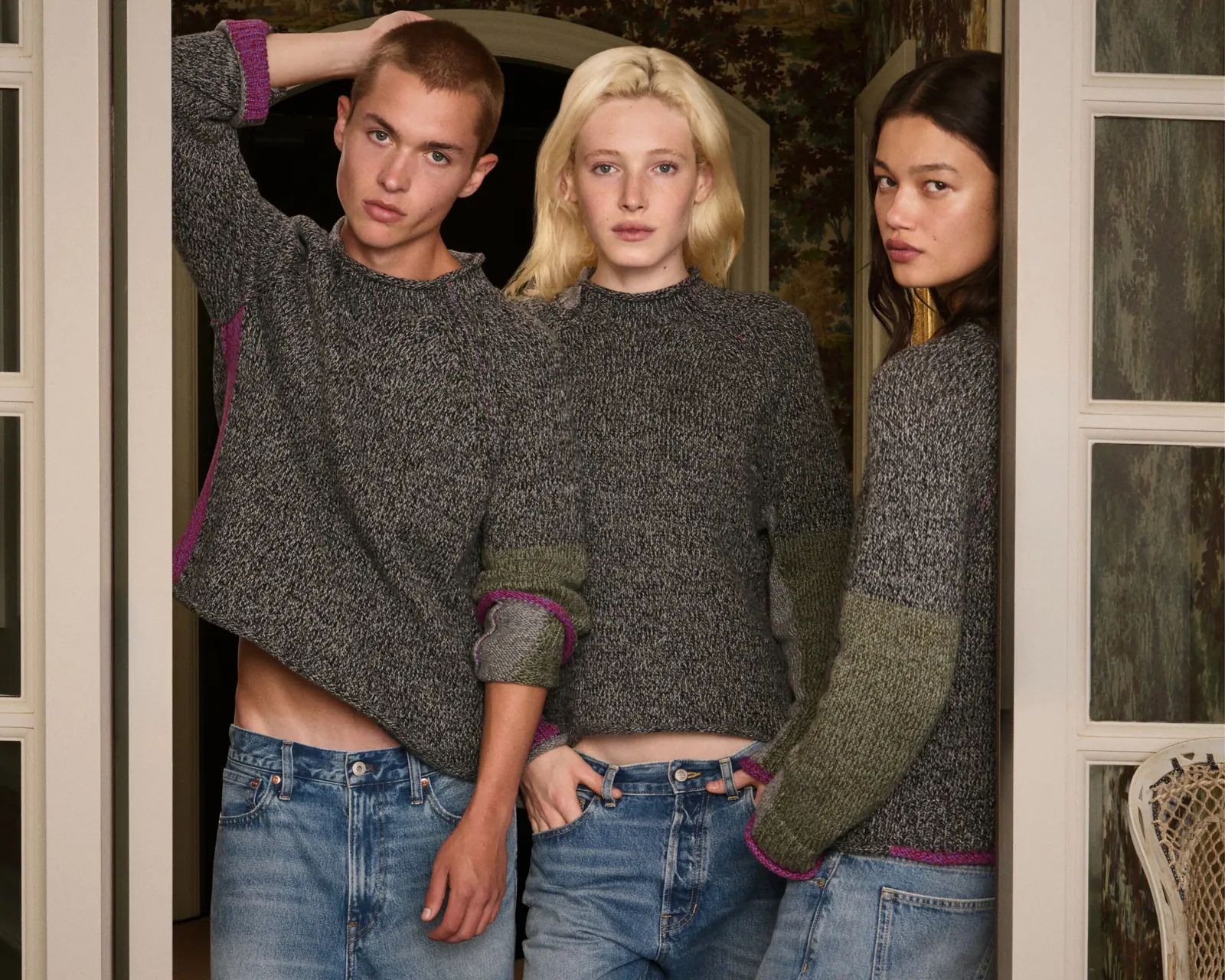
The collection also includes marled knits, a shrunken cashmere cardigan set and an art-striped sweater. These offer different ways to change a familiar wardrobe, using texture, scale or surface rather than an obviously disrupted construction.
A smaller cardigan can alter the apparent proportions of a wider trouser. A textured knit can give a simple outfit depth without adding more accessories. Those are useful ideas even for someone whose interest stops short of the more experimental pieces.
For Miami readers, the collaboration is perhaps easiest to approach through individual garments rather than a fully layered fall look. A shirt with an unusual overlap or a deliberately proportioned knit can become the central element, with the rest kept lighter and simpler.
The collection is available through J.Crew online and selected stores. Its appeal rests on a productive question: how much can a familiar garment change while remaining recognizable? Eckhaus Latta's contribution is to make that question visible, while J.Crew supplies the shared wardrobe vocabulary that gives it meaning.