
Dior Turns the Tuileries Into a Stage for Autumn–Winter 2026
Jonathan Anderson’s Dior presentation uses the Tuileries to explore the spectacle of dressing and being seen in Paris.
 By Peter Wong
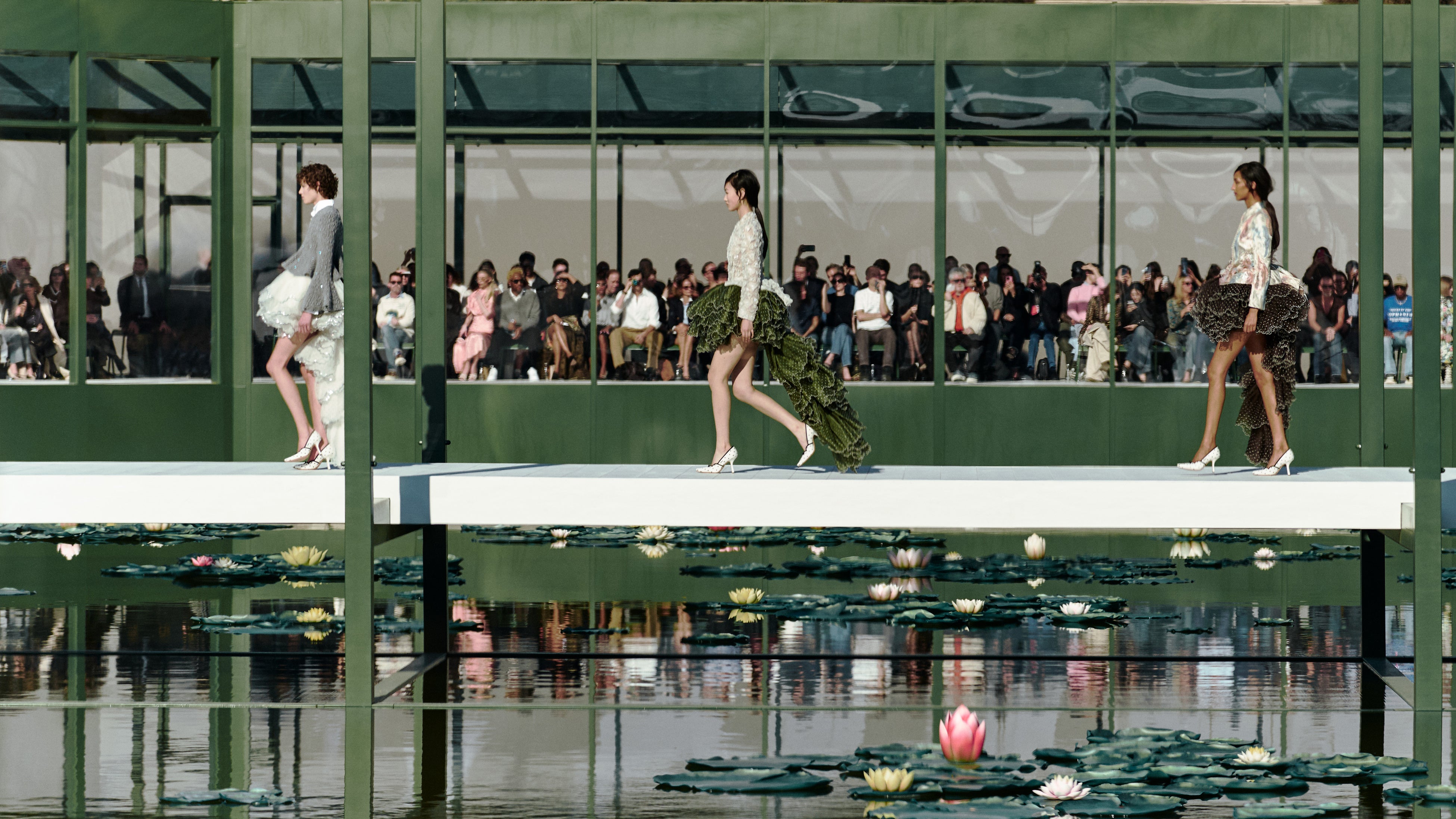
Dior has placed its Autumn–Winter 2026 presentation in the Tuileries, making the Paris garden both a setting and a subject. Under Jonathan Anderson, the show considers the theater of people moving through the city: looking, dressing, watching and becoming part of the view themselves.
The house describes a garden within a garden, a constructed environment set inside an existing public landscape. That double perspective gives the presentation its central tension. Fashion is being staged, but the stage refers to the everyday act of appearing in public.
The setting changes the reading
A runway does more than provide somewhere to walk. It tells the audience what kind of attention to bring. A blank room asks viewers to concentrate on shape. A grand interior lends historical weight. A recognizable outdoor setting introduces associations that exist before the first look appears.
Here, the Tuileries supplies a particularly useful context. The idea of a promenade turns a sequence of outfits into an image of social life. Clothes are seen in relation to other people and to an environment, rather than as isolated objects. The show’s official photographs reinforce that relationship, with the constructed space, audience and water all sharing the frame.
This does not mean a runway is a reliable portrait of how a city actually dresses. It is an edited proposition. The interest lies in what that edit emphasizes: movement, visibility and the small performance involved in choosing what to wear outside.
A wardrobe belongs somewhere
For readers following Dior from Miami, the most transferable idea is not a literal Parisian dress code. It is the relationship between an outfit and the place where it will be worn. Clothes can feel entirely different on a shaded terrace, in a hotel lobby or on a busy street. A successful look acknowledges that setting without becoming a costume for it.
That is also a useful way to approach the collection images. Look beyond individual items and notice how silhouettes occupy space, how garments read at a distance and where the eye lands first. A runway photograph can offer a lesson in proportion even when the full look has little connection to everyday life.
Anderson’s Tuileries presentation gives Dior a clear frame for that exercise. The garden is not simply a decorative backdrop. It becomes a way of thinking about fashion as something that happens between the wearer, the surroundings and everyone else in the scene.